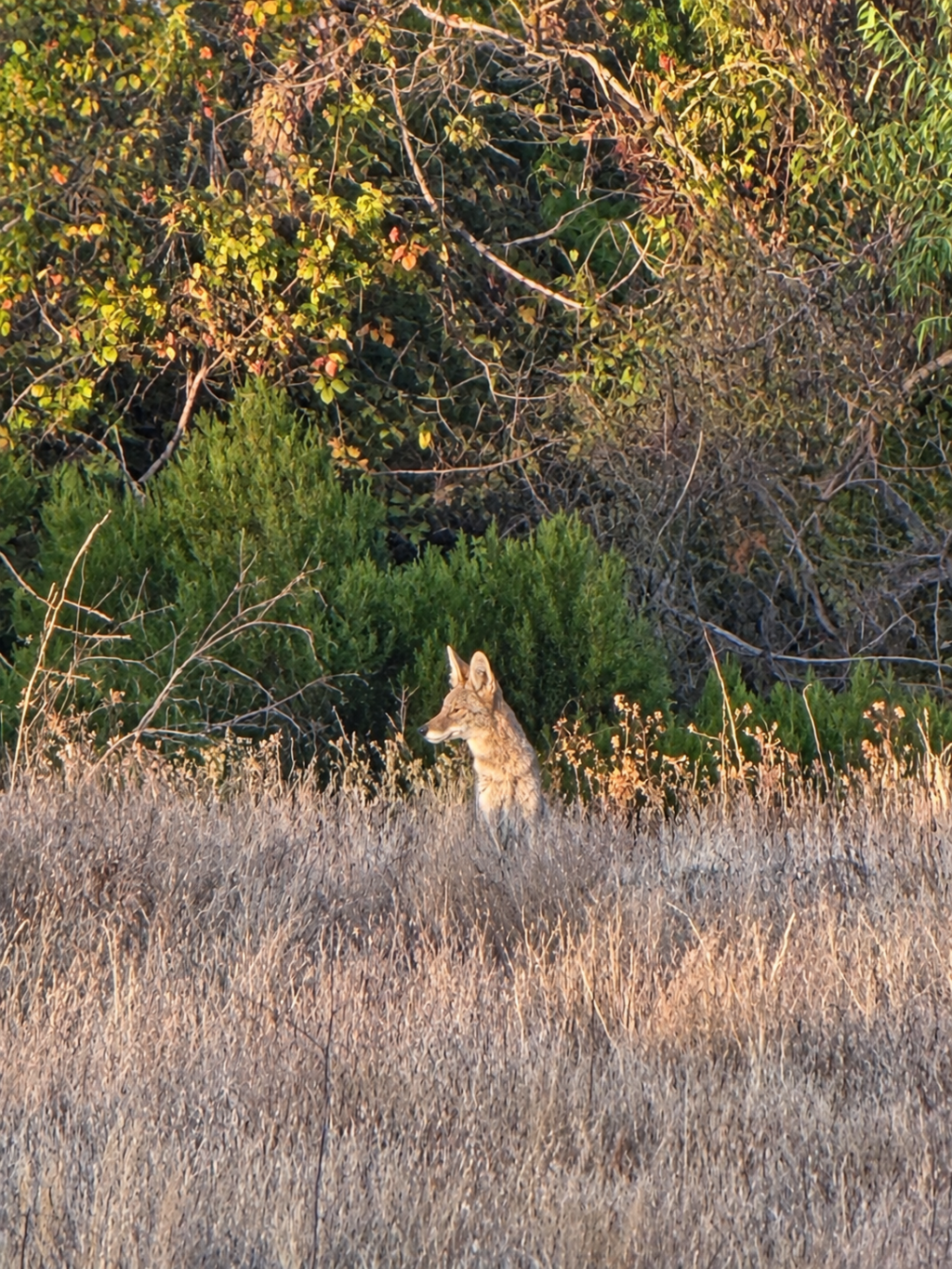
I was walking through a residential neighborhood in Vista, California, when I noticed an animal ahead of me.
At first, I couldn’t get a clear look at him. I was more than a mile by road from Rancho Guajome Adobe County Park, surrounded by houses, traffic, and sidewalks. He had come from even farther inside the neighborhood than I had.
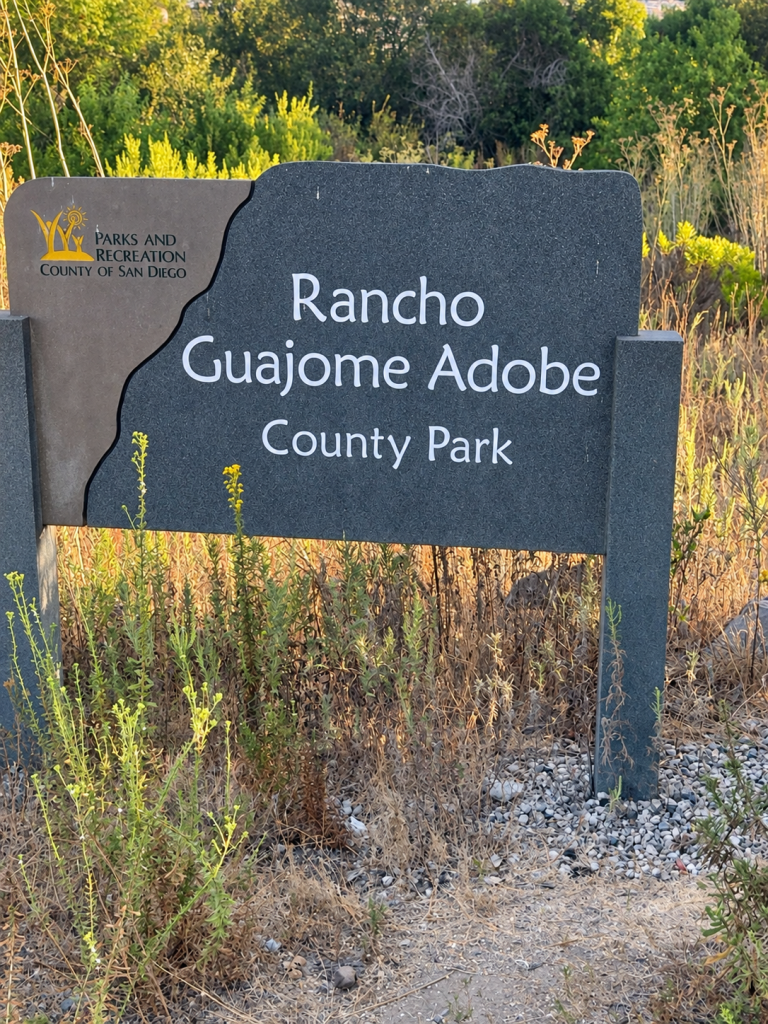
This wasn’t where I expected to see a coyote.
Then he began to run.
That was when I noticed something else: He was running on three legs, holding one front leg high off the ground.
He moved differently, but he moved quickly. Whatever had happened to him, he had learned how to survive with it. He ran ahead of me, turned right onto the same road I was taking, and then turned left where I was also planning to turn.
For a while, it almost seemed as though we were traveling together.
I stayed well behind him. At one point, I was probably within a hundred yards, but once he noticed me, he quickly created more distance. Soon he was two or three hundred yards ahead.
Cars passed him. One slowed down beside him, and he turned briefly, giving me a chance for a better photograph. I missed the moment. A little later, after several more cars came through, he disappeared.
I assumed he had slipped into a yard, a drainage area, or one of the remaining patches of brush. I continued walking toward Guajome.
I know these trails well.
I have probably walked through this park thirty times—perhaps as many as fifty. I have walked to its far end at least twenty times. Twice, I continued along the trail until I reached Oceanside. On two other days, I walked more than six miles out toward the ocean before turning back, still finishing with more than twelve miles for the day.
These weren’t unfamiliar trails. I had spent many hours walking them.
Yet I had never seen what I saw that morning.
I had traveled nearly another mile from where the coyote disappeared when I caught movement in the distance.
There he was again.
He stood in tall grass near the edge of the brush, about a hundred yards away. Only his head and upper body were clearly visible. The morning light caught his face and large ears as he looked toward the trail.
Then he turned and looked directly at me.
For a moment, we simply caught each other’s gaze.
It almost felt as though he had been waiting for me to catch up.
“Hello, old friend,” I thought.
Of course, he was not an old friend. I had known of his existence for less than an hour. But after watching him navigate the neighborhood and wondering where he had gone, seeing his head rise above the brush felt strangely like a reunion.
He remained visible long enough for me to recognize him and take a photograph.
Then he was gone again.
I had followed streets and marked trails to reach the park. He had apparently followed fences, fields, brush lines, drainage areas, and openings hidden from the road.
Somewhere along the way, our two routes had separated. Nearly a mile later, they had come together again.
The park was not new to me.
But his park was.
I knew the wide trails, the lakes, the fields, and the route that could eventually carry me all the way to Oceanside. I knew where the paths turned and where they led. But beyond those familiar trails was another network of passages—routes used by animals moving through brush, behind fences, and across the remaining open land.
The roads showed me one version of the landscape.
The coyote revealed another.
The area surrounding Guajome has changed quickly. New apartments and condominiums have risen where farmland and open space once stood. Construction seems almost constant. I cannot know where this coyote once lived, what happened to his front leg, or how often he travels through those neighborhoods.
But I found myself wondering how many of his familiar paths have disappeared beneath those new buildings.
And still, he continues.
Running on three legs, he had made his way through a residential neighborhood, across busy streets, beyond passing cars, and back into the cover of the park.
There was nothing helpless about him.
He was cautious. He was observant. He knew when to run, where to turn, and where the remaining cover could be found. What looked like an uncertain journey to me may have been a route he already knew well.
A little farther along the trail, I noticed a rabbit sitting nearly invisible beside the brush—a quiet reminder that the coyote had returned to a place where he knew how to survive.
As I continued walking, I thought about how often we judge a journey without being able to see the path behind it.
We see where someone is standing today, but not everything they crossed to arrive there. We notice the limp, the scar, or the missing piece, but we do not see the strength it took to continue. We assume someone is lost simply because we cannot recognize the road they are following.
But not every path is visible to us.
Some paths run behind fences. Some disappear into brush. Some remain hidden beside roads we have traveled dozens of times. And some are created only because the old way forward has been taken away.
Sometimes, what appears broken is still remarkably capable of finding its way home.
I thought I was simply taking another familiar morning walk.
Instead, God allowed me to cross paths twice with a survivor—and to recognize that even along a trail I thought I knew, another journey was unfolding just beyond my sight.
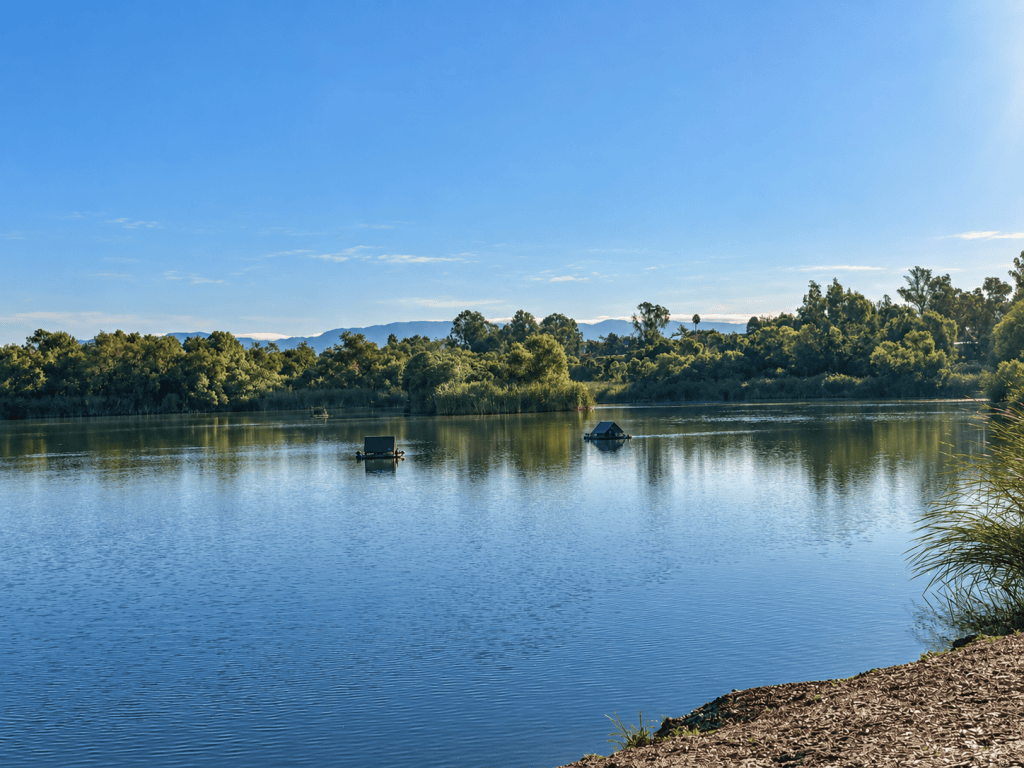
Guajome Lake and the surrounding wetlands provide shelter and food for birds and other wildlife.


Leave a Reply