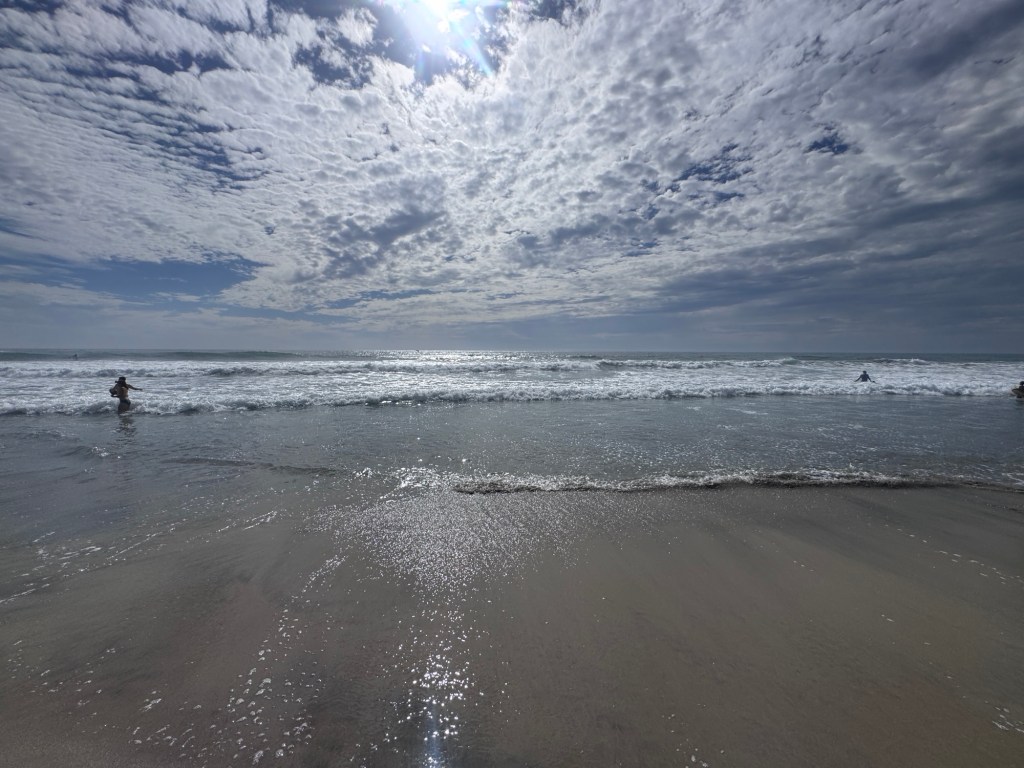
Solana Beach sits along a beautiful stretch of Southern California coastline between Encinitas and Del Mar. It is an attractive area, surrounded by some of the most desirable coastal communities in San Diego County.
But what held my attention that day was not the expensive homes or the communities surrounding the beach. It was the ocean.
A tropical system remained hundreds of miles out in the Pacific. Reports said it was contributing to larger waves and some beach damage farther north in Orange County and Los Angeles. We did not see that kind of damage at Solana Beach, but the ocean still seemed unsettled.
From farther offshore, the waves would begin to rise. For a moment, they looked as though they might develop into something worth riding.
Surfers and boogie boarders waited for them, many probably hoping for a long ride toward shore. It was Labor Day, and teenagers, college-aged adults, and other local beachgoers were taking advantage of their time away from school or work.
As each swell began to form, it created a moment of anticipation.
Maybe this would be the one.
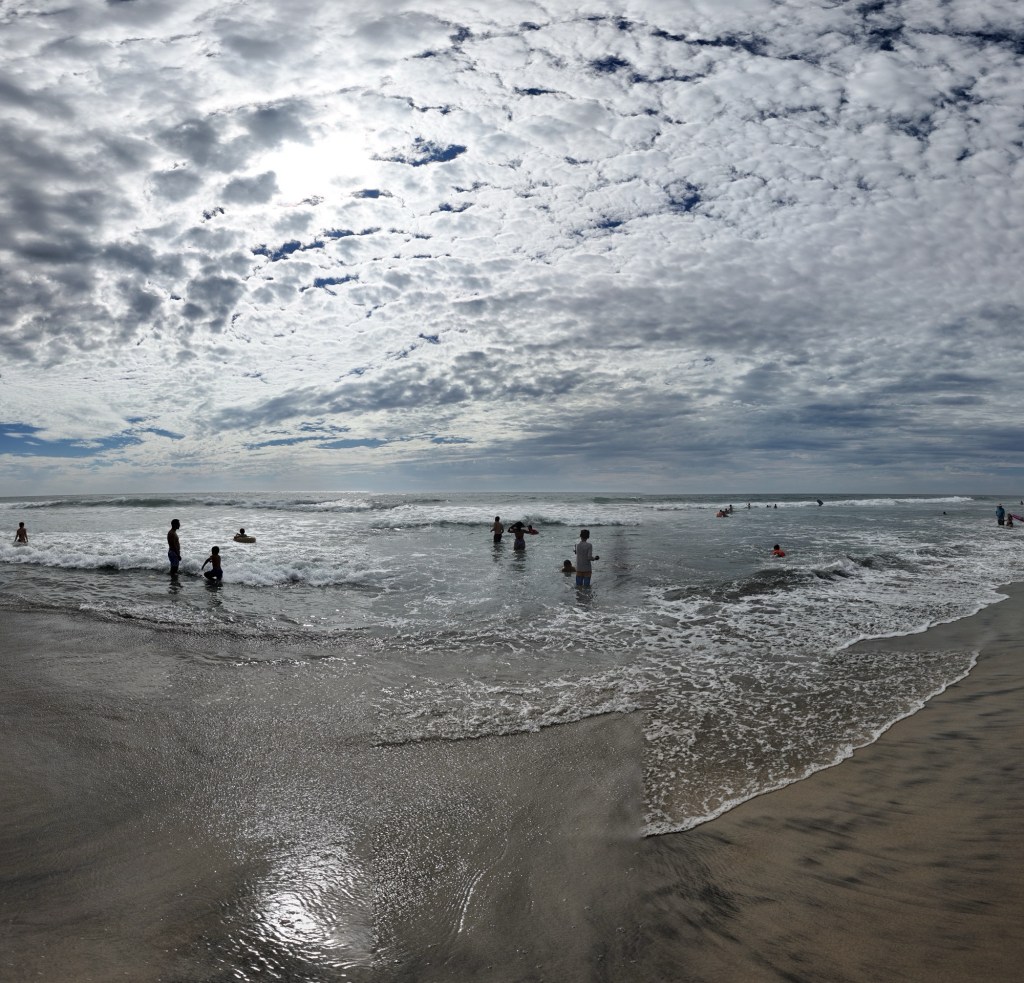
But then the wave would break and quickly close out. Instead of peeling gradually in one direction and leaving an open face to ride, it would collapse across itself. The surfers and boogie boarders might catch it, but only for a few brief seconds. Almost as soon as the ride began, it disappeared into whitewater.
The waves looked promising from a distance, yet most never developed into what people hoped they would become.
Standing safely on the shore, I could see what was happening on the surface. What I could not see was what the distant storm might have been doing beneath it.
Was the additional water creating stronger currents? Were the sandbars redirecting it through unseen channels? Was water moving back offshore through a rip current somewhere along the beach?
I could not know because I was not in the water.
Closeout waves do not necessarily mean that a rip current is present. A rip develops when water carried toward shore finds a concentrated path back out to sea. The direction of the swell, the tide, the sandbars, and the contours of the beach can all influence where that current forms.
From land, the water may appear manageable while something powerful is moving beneath its surface.
Life can feel that way too.
We see what is happening around another person, but we do not always understand what is moving within them. We see the visible moment—the reaction, the decision, the frustration, or the silence—but not necessarily the forces that produced it.
Sometimes we do not even recognize those forces within ourselves.
On the surface, everything may look calm enough. Beneath it, however, stress, grief, disappointment, hope, fear, and unanswered questions may all be pulling in different directions.
At other times, something promising begins to form in the distance. We watch it rise and imagine what it might become. Then, almost as quickly, it closes out. The opportunity disappears, the relationship changes, or the future we imagined fails to take shape.
The ride ends before it truly begins.
That does not mean the anticipation was foolish. It means we could only see the surface, while God could see everything moving underneath it.
Perhaps wisdom begins with recognizing how much remains beyond our sight. We can pay attention to the visible signs, respect forces we do not fully understand, and avoid pretending that we know what is happening beneath every surface.
The ocean deserves that kind of humility. So do the people around us. So does life itself.
Standing at Solana Beach, I watched wave after wave begin with promise and then disappear into whitewater. The rides were short, but the lesson remained:
What we see on the surface is real—but it is rarely the whole story.
 Seasons and Horizons
Leave a comment