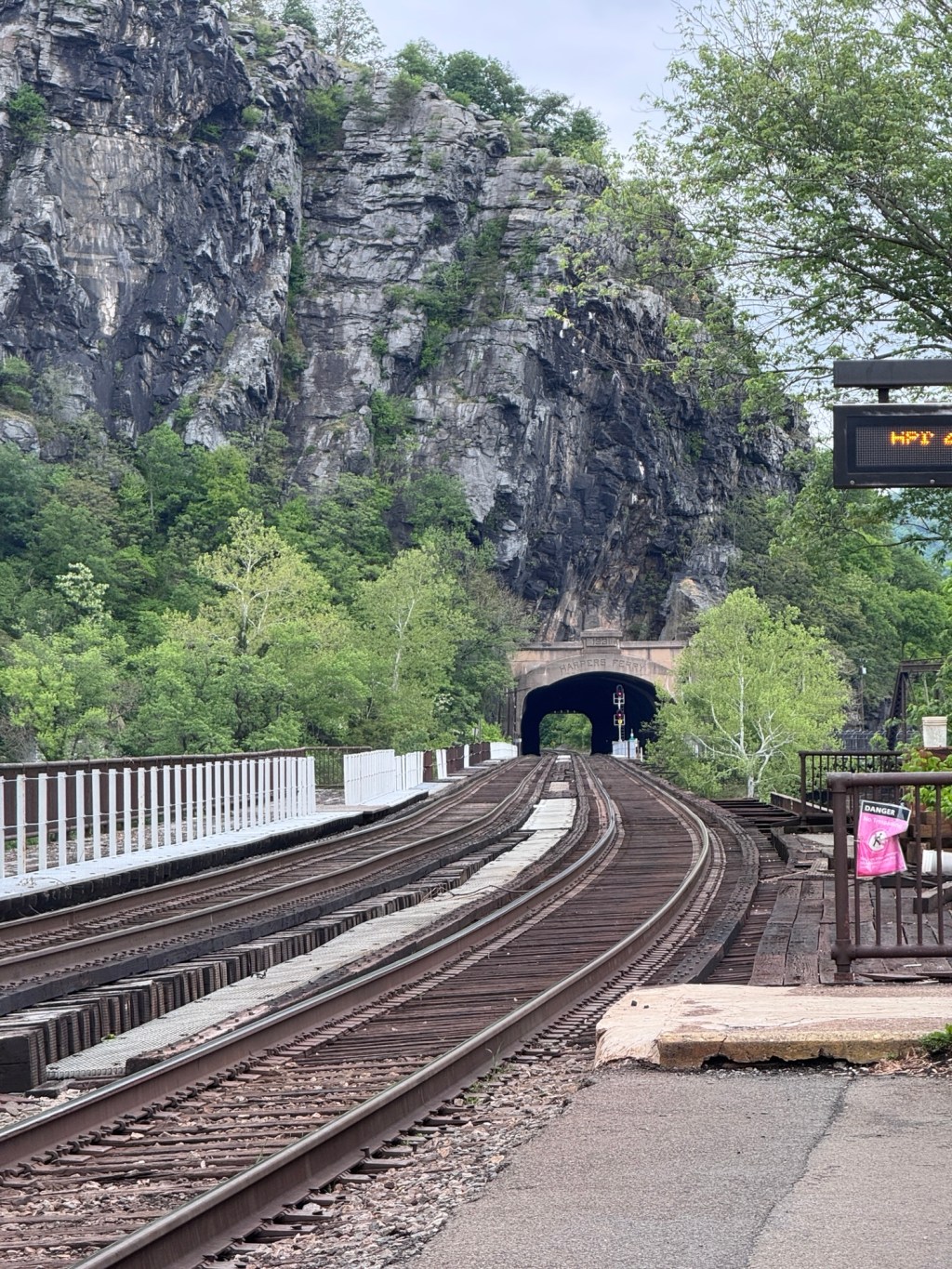
Some places feel important before you fully understand why.
Harpers Ferry is one of those places.
Even walking through it briefly, you get the sense that a lot has passed through here—people, ideas, movements, and moments that carried more weight than they might have realized at the time.
Two rivers meet here—the Potomac and the Shenandoah—cutting through the mountains.
It’s not just scenic. It’s directional.
Everything moving through this region eventually has to reckon with this point. That alone makes it important.
The Armory
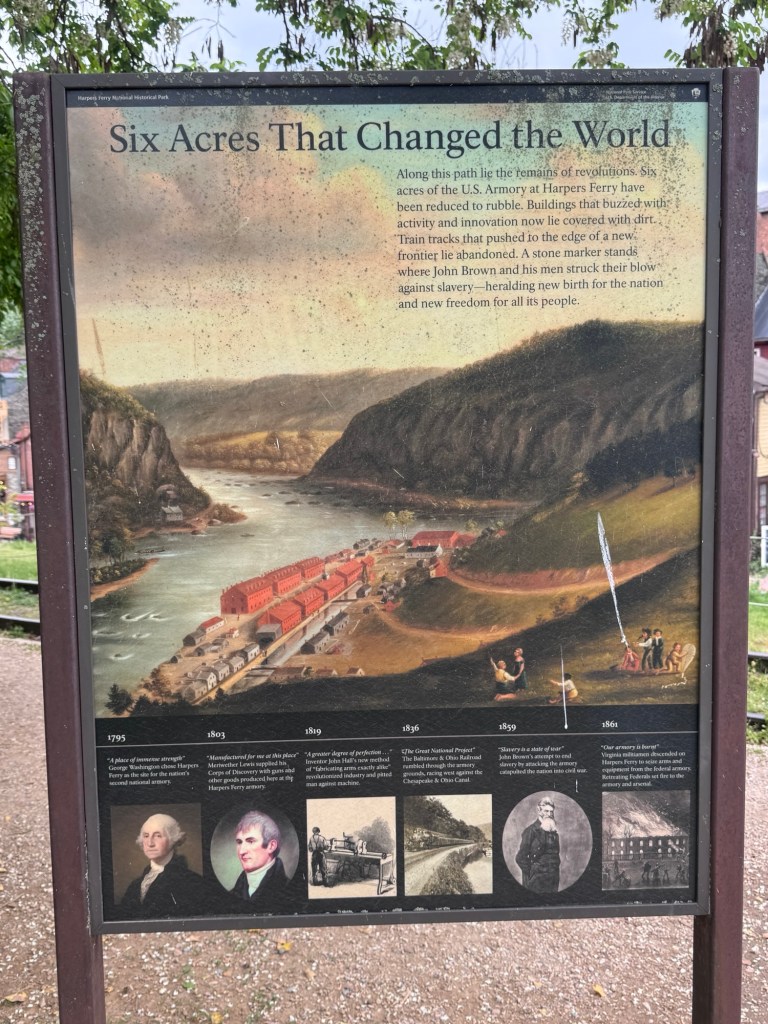
The presence of the federal armory made it more than just a crossing.
This was a place where tools, weapons, and preparation came together. It wasn’t just movement—it was manufacturing and readiness.
Even Meriwether Lewis passed through here, preparing for something much larger than himself. Not starting here—but getting ready here.
John Brown
Then there’s the moment that shifts everything.
John Brown came here not to pass through—but to change something.
He took the armory, believing it could start something bigger. It didn’t unfold the way he intended, but it forced the country to look at something it had been avoiding.
That alone gives this place weight.
The Feeling of the Town
Today, it feels different.
It’s busy. It’s built for visitors. But underneath that, there’s still something quieter. Something layered.
You get a sense that this place didn’t become important once—
it became important again and again.
What struck me most wasn’t one event.
It was the realization that Harpers Ferry kept appearing whenever something larger was unfolding.
George Washington saw its value.
Meriwether Lewis prepared here.
Industry grew here.
Railroads converged here.
John Brown changed the conversation here.
Armies fought over it.
And standing there today, you realize that Harpers Ferry wasn’t built for history.


Leave a Reply